

The breakout is gone, but it left a brown, reddish or purple mark that's still there weeks later. It's very common and there's a reason for it. The good news: with a consistent routine that doesn't irritate your skin, the look of those marks can improve a lot.
Why marks stay after a breakout
When a pimple gets inflamed, skin reacts by producing more pigment in that spot or by leaving small vessels more visible. That's why there are two kinds of marks: brown or greyish ones, more common in deeper skin tones, and red or pink ones, more visible in lighter skin.
Neither one is a scar: the skin's texture stays smooth. If you feel a small dip or bump when you run your finger over it, that's something else, and we explain it in our guide to marks versus scars.
How long they take to fade
Left alone, many marks fade with time, but it can take months. What makes them last longer is inflaming the area again: squeezing pimples, over-exfoliating and, above all, the sun, which darkens pigment every day.
The routine, step by step
In the morning
- A gentle cleanser, without scrub particles.
- A serum with ingredients that help even out tone (for example, peptides, niacinamide or vitamin C).
- A light moisturizer.
- Broad-spectrum sunscreen, SPF 30 or higher, every day even when it's cloudy.
At night
- Remove makeup and cleanse gently.
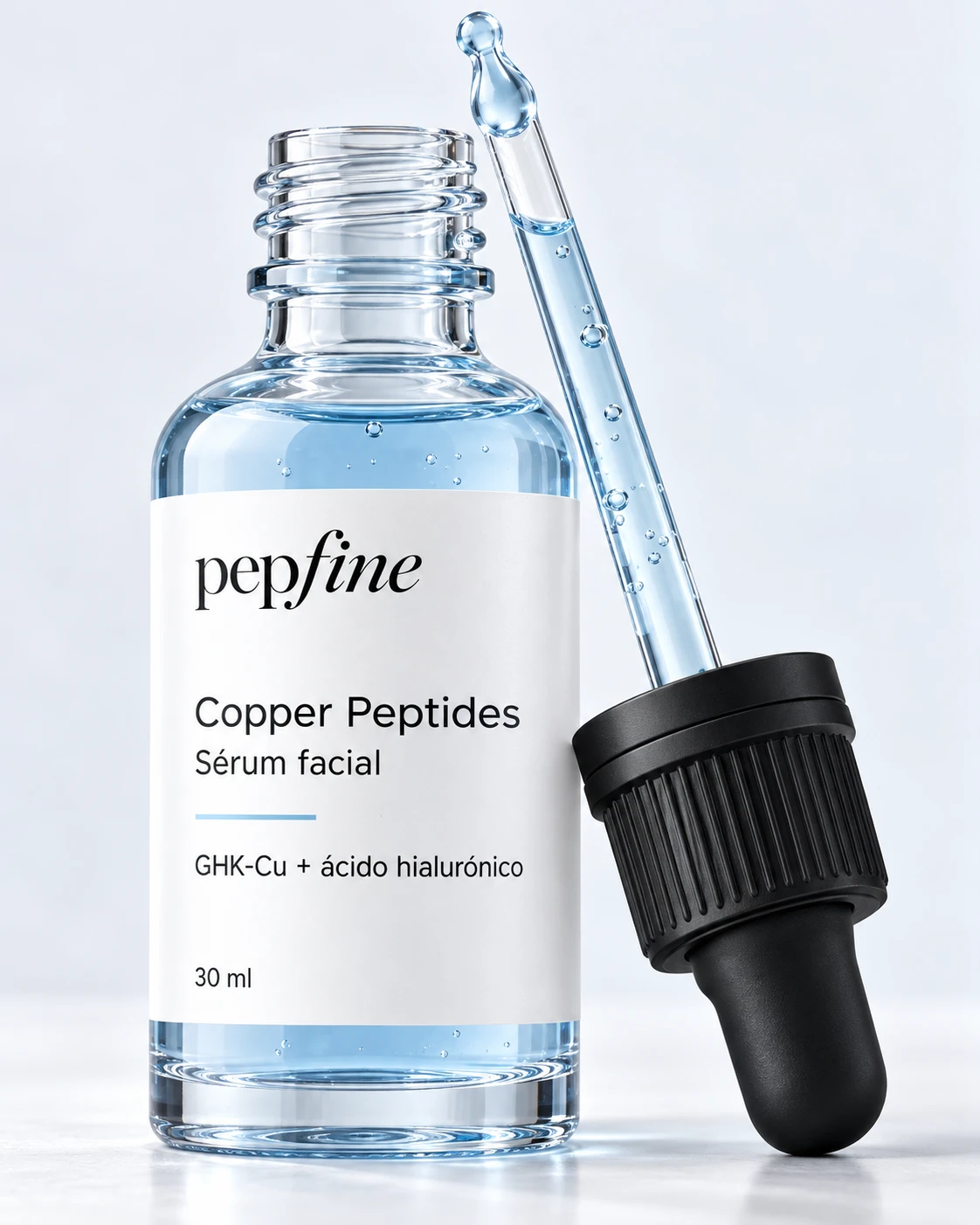
- Your treatment serum: 3 or 4 drops are enough.
- A moisturizer to care for your skin barrier.
If you want to add a gentle chemical exfoliant or a retinoid, use it at night, two or three times a week at first, and never on nights when your skin feels irritated.
Ingredients that usually help
- Sunscreen: without it, every other step does much less.
- Niacinamide: helps tone look more even and is well tolerated.
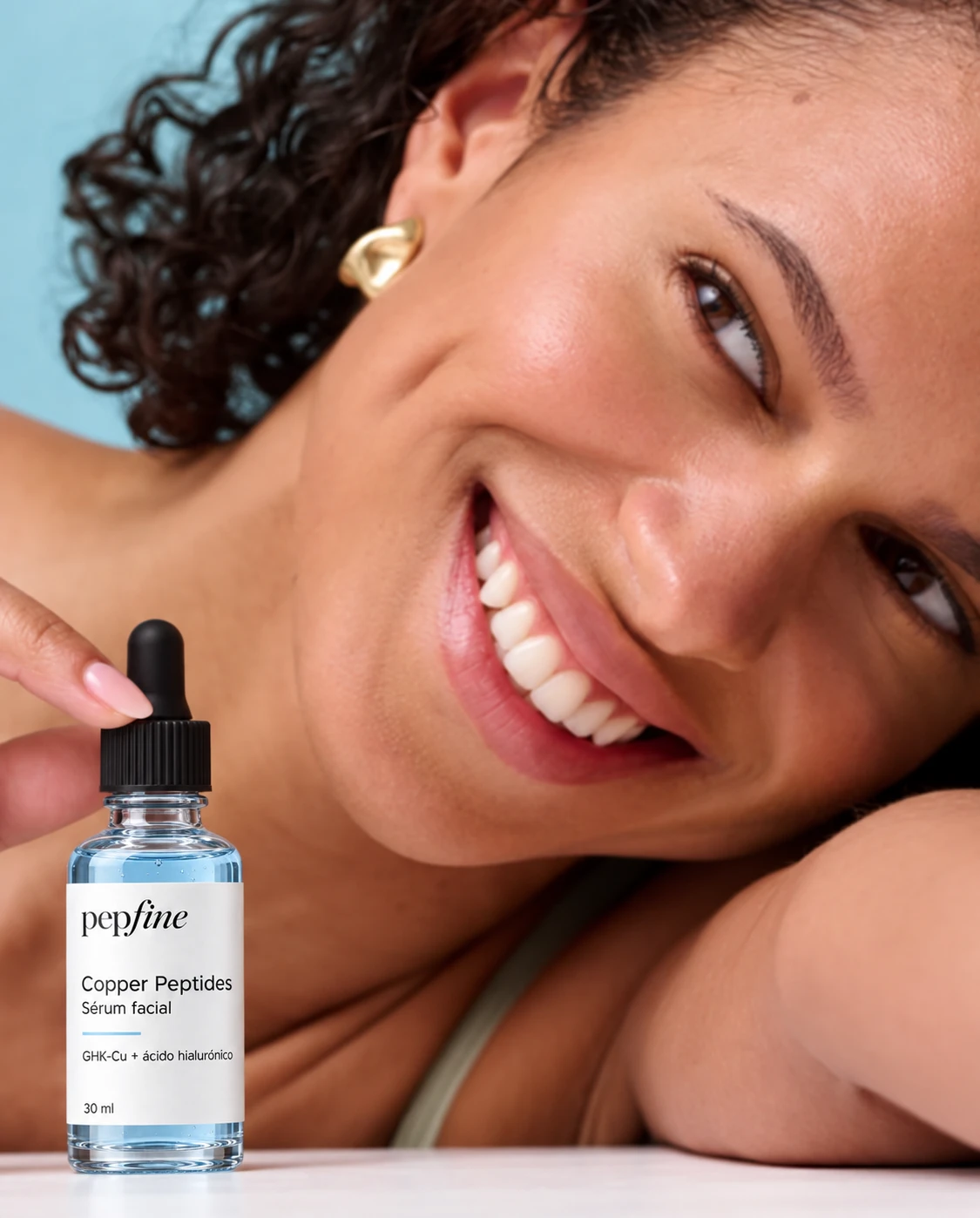
- Peptides such as copper peptide (GHK-Cu): support more even-looking skin without peeling.
- Vitamin C: adds radiance; if your skin is sensitive, look for gentler forms.
- Azelaic acid and retinoids: useful, but best introduced gradually.
What to avoid
- Squeezing or picking pimples and scabs.
- Scrubs with particles or harsh brushes.
- Lemon, baking soda or toothpaste on your skin.
- Switching products every week: skin needs weeks to show changes.
How to track your progress
The mirror is misleading because you see yourself every day. Take a photo with the same light and angle on day 1 and repeat it every three weeks. That's how we do it in the Piel Nueva 90 Protocol: photos on days 1, 20, 40, 60 and 90.
When to see a dermatologist
If painful or deep breakouts keep appearing, if marks get darker instead of lighter or if you notice dips in your skin, it's best to book a consultation. A cosmetic routine supports, but doesn't replace, a professional's diagnosis.
By skin type
Oily or breakout-prone skin
Choose gel or fluid textures and products labeled «non-comedogenic». Don't skip moisturizer: dehydrated skin makes more oil and gets irritated more easily.
Dry or sensitive skin
Prioritize calming before treating. If something stings, pause strong actives for a few days and go back to basics. A gentle serum used consistently does more than a strong one that forces you to stop.
Medium or deep skin tones
Brown marks tend to last longer and darken with any irritation. Avoid aggressive exfoliation and use tinted sunscreen, which also helps against visible light.
Common myths
- «If it stings, it's working»: stinging is irritation, and irritation darkens marks.
- «The sun dries out pimples»: it may dry the surface, but it darkens marks.
- «More product, faster results»: skin takes what it needs; the excess just irritates or goes to waste.
- «You have to exfoliate every day»: two or three times a week is usually more than enough.
A sample week
Mornings: gentle cleanser, serum, moisturizer and sunscreen every day. Nights: serum and moisturizer; if you use an exfoliant or retinoid, only on Tuesdays and Fridays, and on Sunday let your skin rest with just moisturizer.
Frequently asked questions
Can I wear makeup in the meantime?
Yes. Choose formulas that don't clog pores and remove your makeup well every night.
Are red and brown marks treated the same way?
The basics are the same: don't irritate and wear sunscreen. Red marks usually improve as skin calms down; brown marks respond better to ingredients that help even out tone.
How long should I wait to see changes?
Many people notice softer skin within two or three weeks; marks usually need 8 to 12 weeks of consistency to look clearly lighter.


 ✦✦✧✦