

Key takeaways
- GHK is a three-amino-acid peptide your body makes naturally: it's found in plasma, saliva and urine.
- It was discovered in 1973 and binds strongly to copper, which is why it forms the GHK-Cu complex, copper peptide.
- GHK is also released from proteins like collagen when skin is injured, and its blood levels drop with age.
- On cosmetic labels it usually appears as copper tripeptide-1. Being found in the body doesn't mean the ingredient is extracted from it.
Where do copper peptides come from? From your own body: GHK is a very small peptide found naturally in plasma, saliva and urine, and it binds to copper to form GHK-Cu. It was first described in 1973. In cosmetics it's used as an ingredient, and on labels it usually appears as copper tripeptide-1.1
Here's its story, where it's found in the body, why it carries copper, how it ends up in a serum and what all of that means for your routine.
How copper peptide was discovered
First, a basic idea: a peptide is a short chain of amino acids, the same building blocks the body uses to make proteins. Proteins, like collagen, are very long chains; peptides are much shorter. GHK is among the smallest there are, with just three pieces.
GHK-Cu was isolated in 1973 in Loren Pickart's lab. The research was trying to understand why albumin, a blood protein from young people, made liver tissue from older people produce proteins as if it were younger. Looking for what caused that effect, the team found a very small molecule.1
Later studies showed that molecule was a tripeptide, meaning a chain of just three amino acids: glycine, histidine and lysine. That's where its name comes from, GHK, from the one-letter codes of those amino acids. And since it binds strongly to copper, it readily forms the GHK-Cu complex.1
Where GHK is found in your body

GHK isn't a cosmetics invention. Your body naturally has it in blood plasma, saliva and urine.1
Its levels change with age. In plasma, it's around 200 nanograms per milliliter at age 20 and drops to about 80 by age 60. Some researchers link that drop to skin's lower ability to repair itself over the years, although that doesn't mean applying it to your skin replaces what's lost.1
It's also released when skin is injured
The GHK sequence sits inside some skin proteins, like type I collagen and a protein called SPARC. When there's a wound, the enzymes that repair tissue break down those proteins and GHK is released right at the damaged area. That's why it's seen as one of the natural signals involved in skin repair.2
Why it's called copper peptide
GHK binds copper very tightly. So much so that it can take copper carried by albumin in the blood. When GHK is bound to copper it's called GHK-Cu, and that complex is what's known as copper peptide.1
Copper is a mineral the body needs in very small amounts. In copper peptide it isn't loose, but bound to the peptide, which is what makes it useful as a cosmetic ingredient.
Lab studies have seen GHK act both on its own and bound to copper, although for years its effects were credited mainly to that relationship with copper. In cosmetics, the form used is the copper-bound one, GHK-Cu.2
From the body to the bottle: how it got into cosmetics
After its discovery, GHK-Cu began to be studied in skin repair and over time came to be used in skin and hair products.2
Just because GHK exists in the body doesn't mean the ingredient in your serum is taken from anyone's blood. The GHK-Cu in cosmetics is an ingredient produced for the industry. If you want to know how a brand sources it, you can ask them directly. What matters for you is that the label clearly states what the product contains and how to use it.
How to find it on the label
On the ingredient list, copper peptide usually appears under its cosmetic name, copper tripeptide-1. Sometimes the brand also calls it GHK-Cu on the front of the package.3
What its origin means for your routine
Knowing where it comes from helps explain why it's used, but it's best not to read too much into it:
- Your body making it doesn't automatically make it safe for every skin. Always patch test.
- Its levels dropping with age doesn't mean putting it on your skin restores them.
- Much of what's known about GHK-Cu comes from cell and animal studies. In people there are few studies, and they're small.
What you can expect from a good copper peptide serum is a gentle active that helps the look of texture and firmness, as part of a consistent routine with sunscreen.
How to use a copper peptide serum
If you decide to try it, these steps help you start calmly:
- Patch test: a few drops on a small area, then wait 24 hours.
- Wash your face with a gentle cleanser and pat it dry.
- Apply 3 or 4 drops to clean skin, on face and neck, avoiding the eye area.
- Follow with your moisturizer and, during the day, sunscreen.
- If you use retinol, acids or pure vitamin C, keep them for another time of day.
Keep the bottle tightly closed, in a cool, dry place, away from sun and heat. And if you feel burning or irritation, stop using it: an ingredient having its origin in the body doesn't mean it agrees with every skin.
Common myths about where copper peptide comes from
- It's taken from blood. No: although GHK is in blood, the cosmetic ingredient is produced.
- It's the same as the copper in a bracelet. No: the copper in the peptide is bound to a molecule, not loose.
- It's a medicine. No: the copper peptide in serums is a cosmetic ingredient for external use.
- Since it's natural, it can't irritate. Any ingredient can cause a reaction in someone.
Frequently asked questions
Is copper peptide natural or synthetic?
GHK exists naturally in the body, but the one in cosmetics is an ingredient produced for the industry. It's the same molecule, not an extract from the body.
Who discovered copper peptide?
It was isolated in 1973 in Loren Pickart's lab, in research on the effect of albumin from young people on tissue from older people.
What is copper peptide called on the label?
It usually appears as copper tripeptide-1. Some brands also use the name GHK-Cu on the package.
What's in the Pepfine Serum?
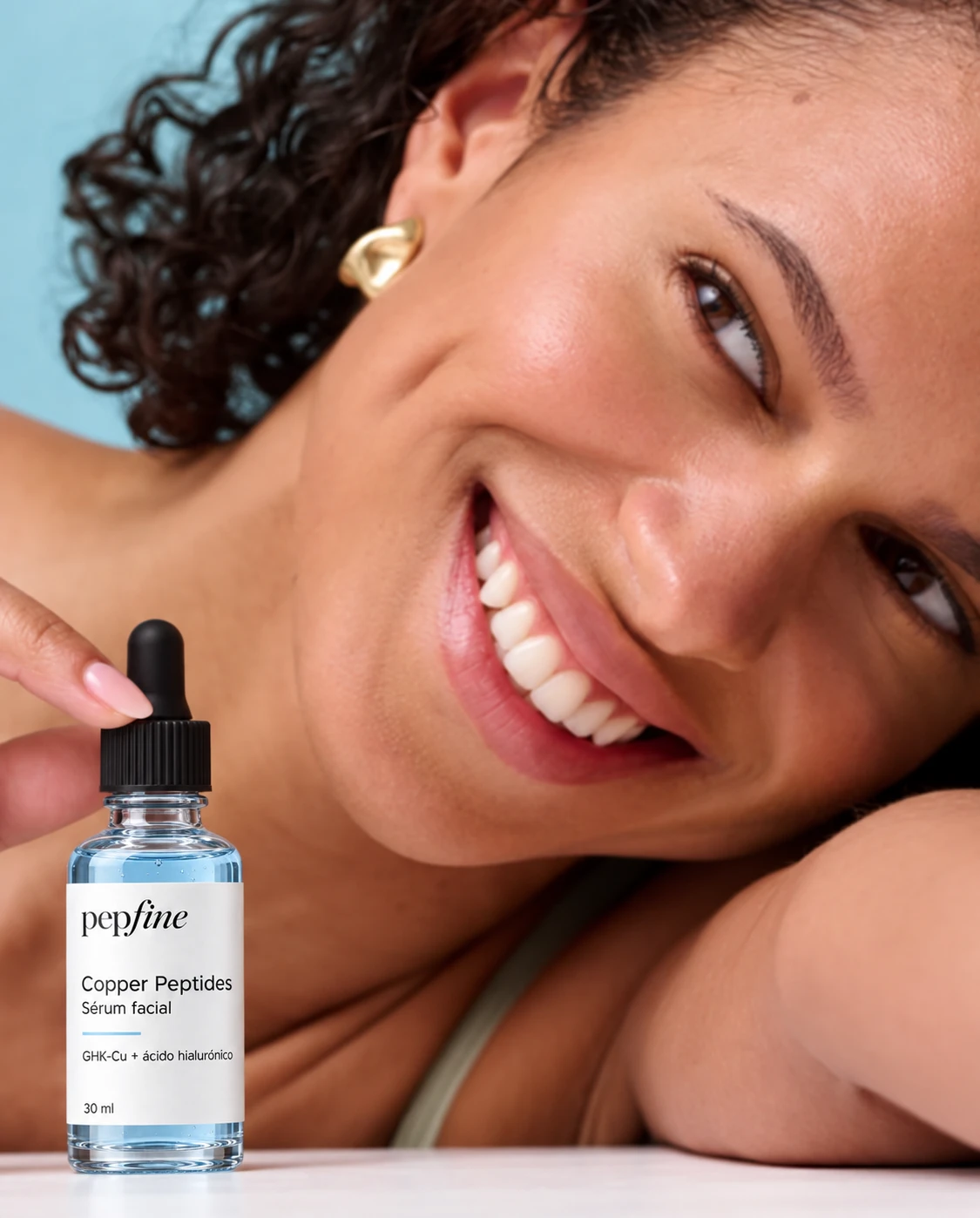
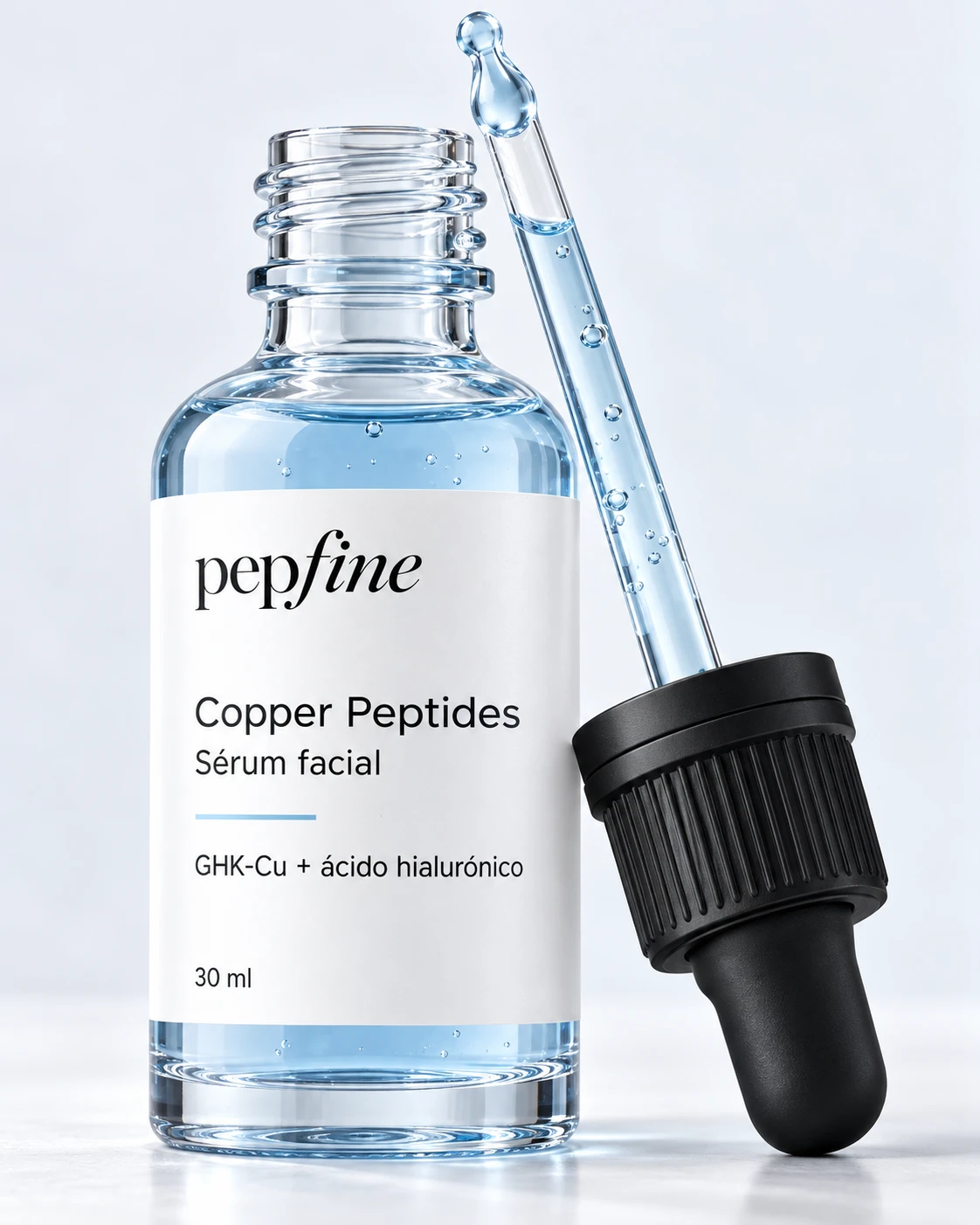
It has copper peptide (GHK-Cu) and hyaluronic acid, with no exfoliating acids. Use 3 or 4 drops morning and night on clean skin, before moisturizer, avoiding the eye area.
Is copper peptide only used on skin?
No. Since it started being used in cosmetics, GHK-Cu has appeared in both skin and hair products.2
Sources
- GHK Peptide as a Natural Modulator of Multiple Cellular Pathways in Skin Regeneration — BioMed Research International, PMC (2015)
- Regenerative and Protective Actions of the GHK-Cu Peptide in the Light of the New Gene Data — International Journal of Molecular Sciences, PMC (2018)
- Augmented Skin Beneficial Effects of Thermus Thermophilus and Bacillus Subtilis Mixed-Culture Ferment Extract by Tripeptide GHK-Cu — Skin Research and Technology, PubMed (2026)

 ✦✦✧✦