

Key takeaways
- A mark and a scar aren't the same: a mark is a flat change in color; a scar changes texture, usually as a dip.
- Scars rarely go away completely on their own, and no serum fills in a dip.
- A copper peptide serum can help improve the look of marks, redness and the overall texture of the skin around them.
- Daily sunscreen and not squeezing breakouts are part of the plan.
- To change a scar's texture, see a dermatologist.
Do copper peptides help acne scars? They can help improve the look of marks, redness and overall skin texture, but no serum fills in a dip. If your scar is sunken or raised, a cosmetic serum is a companion; changing its texture takes a dermatologist. Here's the difference and what to expect.
First: is it a mark or a scar?
When a deep pimple clears, a scar can form. Not every breakout leaves a scar, and if what you see is a flat spot of a different color, it usually isn't a scar: it's a mark left by inflammation.1
Most scars leave dips that make skin look rough or uneven. Over time, the color change usually fades, but the scar stays. Scars can soften, but they rarely go away completely on their own. Less often, the scar is raised above the skin.1
- Mark: skin feels smooth to the touch and only the color changes.
- Scar: you feel a dip, an edge or a raised area.
To tell which you have, look at clean skin in good light and run your fingertip over the area. We explain it in more detail in our article on marks vs scars.
What copper peptide can do
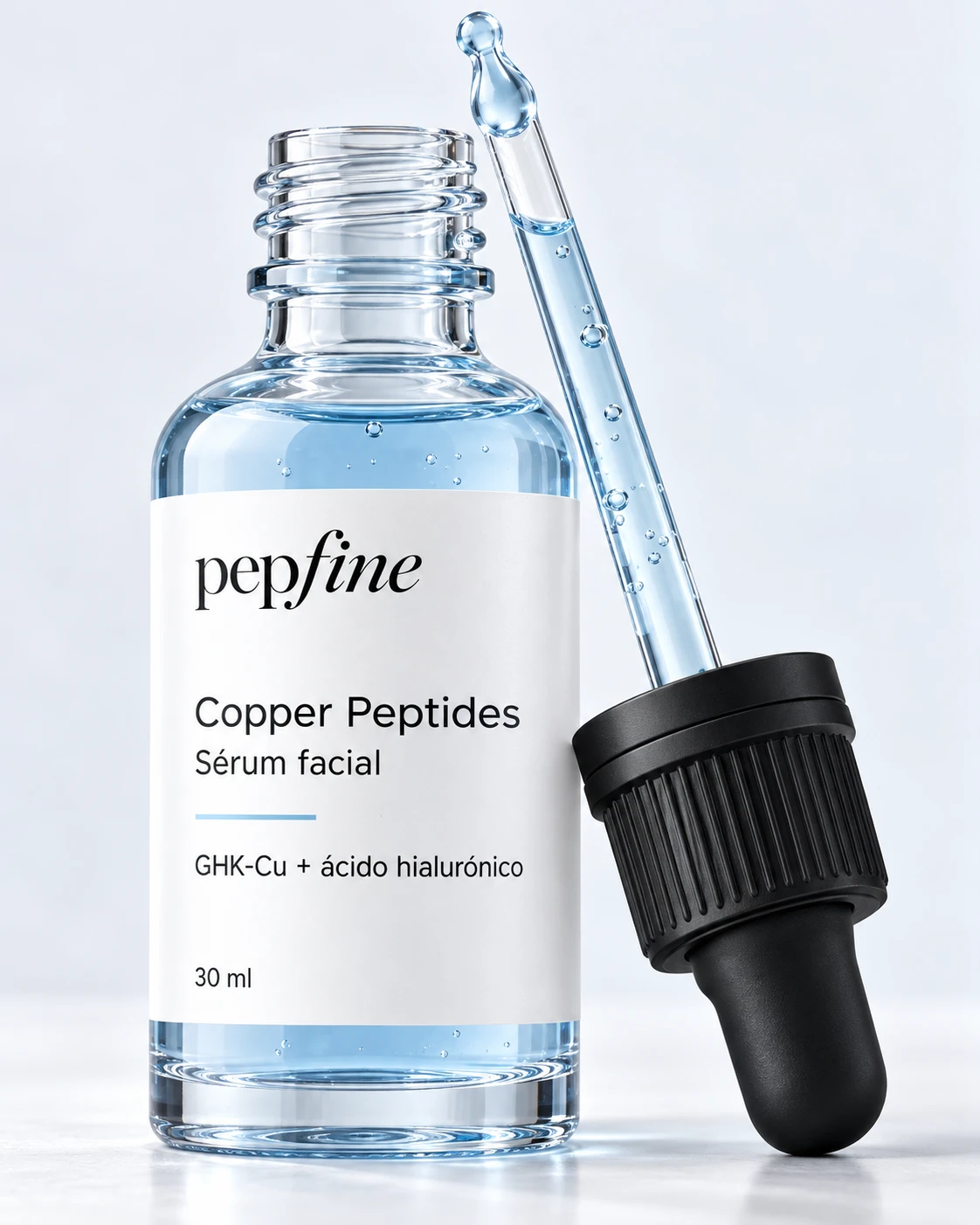
Copper peptide (GHK-Cu) is a tripeptide bound to copper that has been used in skincare for decades. In a serum, it's chosen for how skin looks, not to change its structure.2
- Help improve the look of marks and redness left by breakouts.
- Help the overall texture of skin look and feel smoother.
- Leave skin hydrated, especially when paired with hyaluronic acid.
- Fit into a daily routine without exfoliating acids, which helps if your skin irritates easily.
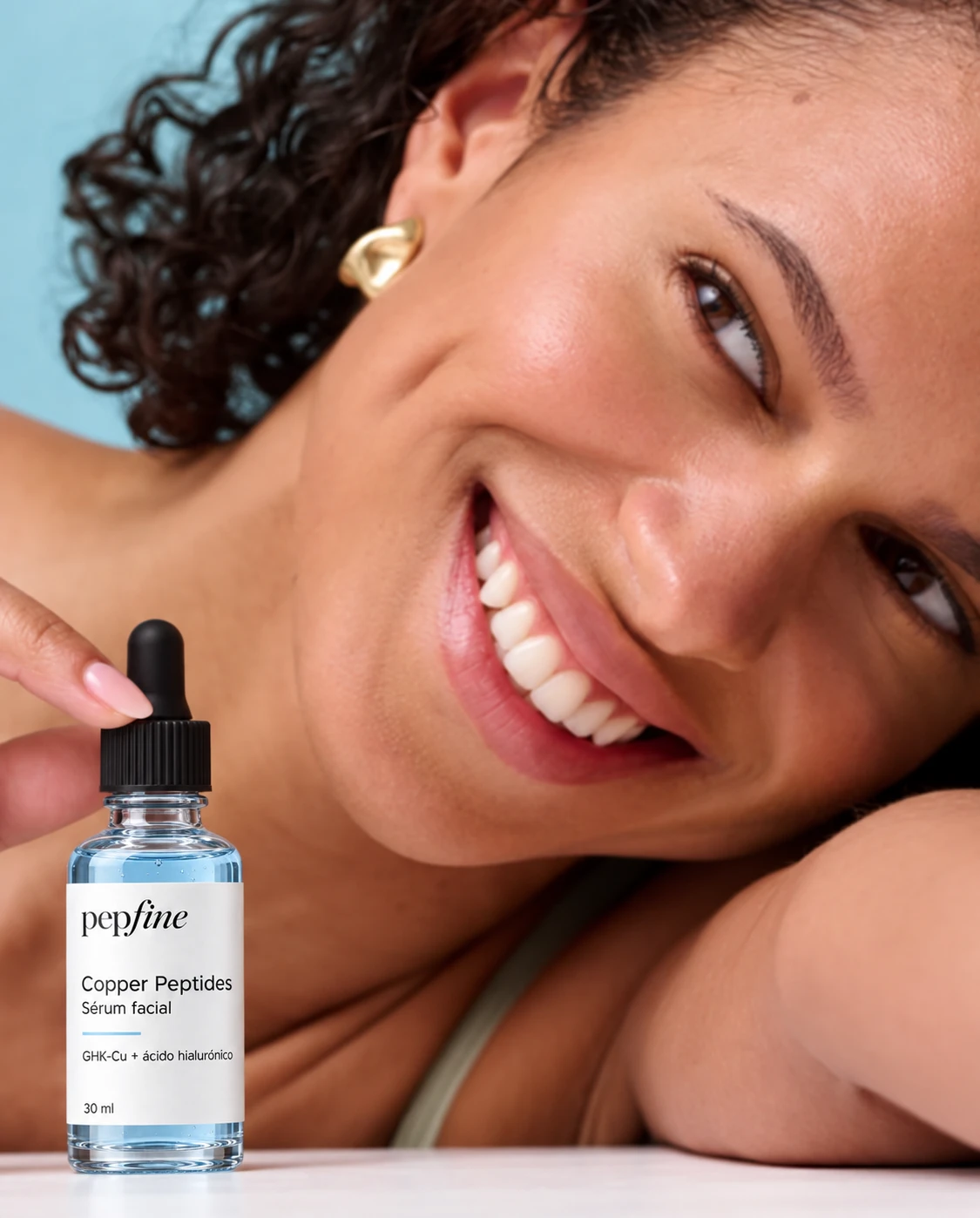
When the surrounding marks look more even and skin looks smoother, scars tend to draw less attention, even though their shape doesn't change. Plus, the hyaluronic acid in the Pepfine Serum helps skin hold on to moisture, and well-hydrated skin usually looks more even.
What a serum can't do
- It doesn't fill in dips or flatten raised areas.
- It doesn't replace the procedures a dermatologist chooses for a scar's texture.
- It isn't a medicine: it's not for active, painful or very inflamed breakouts.
- It doesn't change things overnight: how skin looks changes gradually.
Much of the research on GHK has been done in the lab and in small studies. That's why we talk about look and feel, not effects on a scar. If someone promises a product will make your scars stop showing at home, be skeptical.
How to use it on skin with marks and a tendency to break out
- Cleanse with a gentle cleanser, without scrubbing.
- Apply 3 or 4 drops of serum to face and neck, avoiding the eye area.
- Follow with a light moisturizer.
- During the day, finish with broad-spectrum SPF 30 or higher sunscreen.
Use it morning and night. If you use retinol, acids or pure vitamin C, apply them at a different time of day. And if it's your first time, patch test for 24 hours. 3 or 4 drops are enough: more doesn't mean better results, and at that amount a bottle lasts about a month.
A sample routine
- Morning: gentle cleanser, copper peptide serum, light moisturizer and sunscreen.
- Night: gentle cleanser, copper peptide serum and moisturizer.
- If you use a breakout product your dermatologist prescribed, use it as directed and keep the serum for the other time of day.
Keep this routine short and consistent. Switching products every week makes it hard to know what works for your skin. Patience is part of the routine.
Two habits that matter more than any serum

Don't squeeze, pop, scratch or pick at breakouts. Doing so increases inflammation in your skin, and the more inflamed it is, the more likely a scar becomes; it also raises the risk of infection and discoloration. Also avoid touching breakouts all the time: touching can make them worse, and when they get worse they're more likely to scar.1
The other habit is daily sunscreen. The sun makes marks look darker for longer, so it's the step that protects what you do with the rest of your routine.
What to expect and how to track changes
How marks look changes gradually, and every skin goes at its own pace. What people usually notice first is that skin feels softer and more hydrated; tone looks more even with consistency and sunscreen.
- Take photos at the same time of day, in the same light and at the same distance.
- Use soft side light to see texture and front light to see color.
- Compare every so often, not every day in the mirror.
If after a while the flat marks look fainter but the dips look the same, that's expected: a scar's texture doesn't change with a serum.
When to see a dermatologist
If you have sunken or raised scars and want to change their texture, see a dermatologist: they can help skin look smoother and more even with procedures chosen for your type of scar. Also see one if you have deep, painful breakouts, or if scarring from breakouts runs in your family, because that makes scars more likely.1
Well-cared-for, calm skin is also a good starting point if you later decide on a procedure. Always follow the instructions of whoever treats you.
Frequently asked questions
Do copper peptides remove breakout scars?
No. They can help improve the look of marks, redness and overall skin texture, but they don't fill in dips or flatten raised areas. For that, see a dermatologist.
Does it help the marks breakouts leave behind?
Flat marks usually look better with consistency and sunscreen, and that's where a copper peptide serum can help. Remember that not every mark is a scar.1
Can I use it if I still get breakouts?
Yes, as part of a gentle routine, since it has no exfoliating acids. If breakouts are deep, painful or very inflamed, see a dermatologist: a cosmetic serum goes alongside their advice, not instead of it.
What else helps with breakout marks?
Not squeezing or scratching breakouts, wearing sunscreen every day and keeping a gentle, consistent routine. If breakouts are frequent or deep, a dermatologist can help you get them under control.1
Can I wear makeup over the serum?
Yes. The order is serum, moisturizer and sunscreen, with makeup last. Remove your makeup well at night before applying the serum again.
Can I use it after a scar procedure?
Only once your skin has healed and whoever did the procedure gives you the green light. Until then, follow their instructions exactly.

 ✦✦✧✦