

Key takeaways
- The outermost layer of skin is a barrier that holds back many molecules; that's why not everything you apply gets through.
- Copper peptide (GHK-Cu) is very small, just three amino acids, which in principle helps it get into skin.
- In lab studies with human skin, copper applied as GHK-Cu passed through the skin's layers and part of it stayed in the skin.
- Those studies were done under controlled conditions, not on a face with a daily routine, so they don't tell you how much your skin absorbs from a serum.
Can copper peptides be absorbed through the skin? In lab studies with human skin, yes: copper applied as GHK-Cu passed through the skin's layers and part of it stayed in the skin. But those studies were done under controlled conditions, so they don't say exactly how much your skin absorbs when you use a serum at home.1
Here's how the skin barrier works, what those studies showed and how to apply your serum to make the most of it.
Skin is a barrier, not a sponge
The outermost layer of skin, called the stratum corneum, is made of flattened cells surrounded by fats. Its job is to protect: to keep us from losing water and to hold back what comes from outside. That's why not everything you put on your skin gets through.
Below the stratum corneum is the rest of the epidermis and, deeper down, the dermis, where the collagen and elastin that give skin its firmness are found. For an ingredient to get there, it first has to cross that outer barrier.
That layer is fatty, so molecules that dissolve in water and carry an electrical charge have a harder time getting through. Pure vitamin C, for example, has this problem, which is why it's formulated in special ways to help it penetrate.3
Size matters too. In general, small molecules have a better chance of getting in than large ones, and many proteins used in cosmetics are extremely long chains.
Why copper peptide's size helps
GHK is a very small peptide: a chain of just three amino acids (glycine, histidine and lysine), bound to copper to form GHK-Cu. Compared with proteins like collagen, which are extremely long chains, it's tiny.4
Being small doesn't mean it will definitely cross the skin, but it does put it in a better position than many larger ingredients. That's why researchers set out to measure how much actually gets in.
What the absorption studies showed
A dermatology group at the University of California, San Francisco studied how copper peptide passes through human skin in the lab. They used pieces of skin in special cells and applied a GHK-Cu solution to different layers: the stratum corneum alone, the epidermis and full-thickness skin.1
Over two days they measured the copper that passed through the skin and the copper that stayed in it. The result: copper applied as GHK-Cu did pass through the skin, and part of it also stayed stored in the tissue, like a reserve.12
What those studies don't tell you
These are interesting findings, but it's worth reading them carefully:
- They were done with pieces of skin in the lab, not on people's faces with their daily routine.
- A water solution of GHK-Cu was applied in a generous, constant amount, very different from 3 or 4 drops of a serum.
- They measured copper, not the whole peptide, so it isn't known exactly in what form it arrived.
- Every formula is different: a serum's other ingredients can change how much gets in.
In short: there's evidence copper peptide can get into skin, but not of how much it does with a specific product in real life.
Absorbs quickly isn't the same as penetrates
When a serum absorbs quickly, what you notice is that your skin stops feeling wet. That mostly has to do with texture and water evaporating, not with how much ingredient reaches the layers below. A light serum may feel dry in seconds and a thicker one may take a bit longer, and that doesn't tell you which one gets in better.
The state of your skin matters too
A healthy barrier lets fewer things through than irritated, broken or freshly exfoliated skin. Applying actives to skin like that might seem like an advantage, but it's the opposite: in that state skin tends to react more, with stinging or redness. It's best to look after your barrier and apply the serum to calm skin.
How to apply your serum to make the most of it
- Wash your face with a gentle cleanser and lukewarm water, and pat it dry.
- Apply 3 or 4 drops of serum to clean skin, on face and neck.
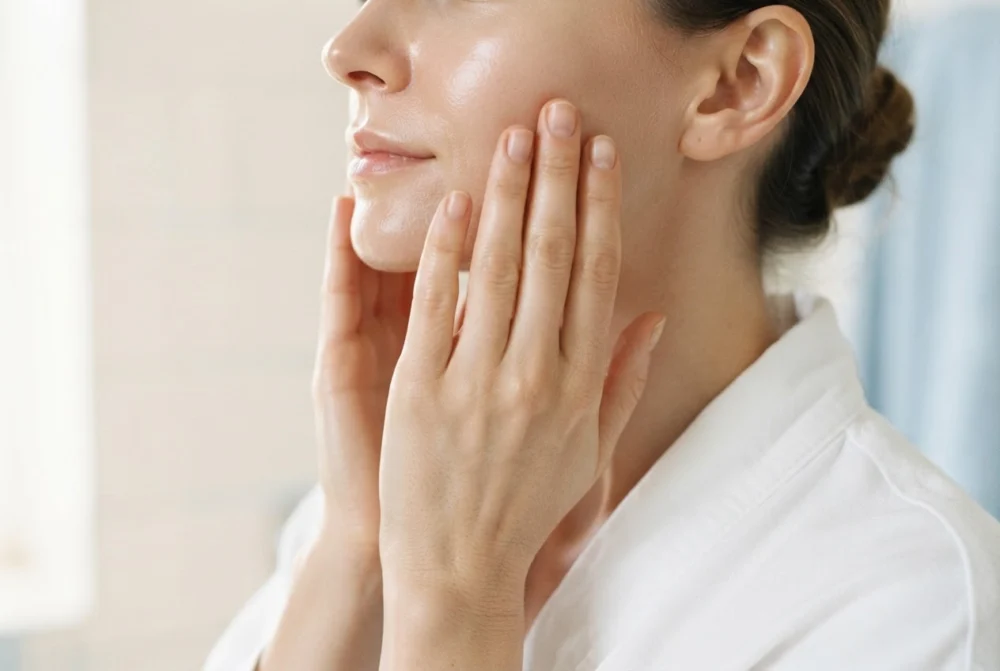
- Press it in with your fingertips, without scrubbing or rubbing hard.
- Let it absorb before applying moisturizer.
- During the day, finish with sunscreen.
Order matters: light products, like serums, go before thicker creams. If you put the cream on first, the serum sits on top and has a harder time reaching your skin.
Two more details help keep the product in good shape by the time it reaches your skin: store the bottle tightly closed, in a cool, dry place, away from sun and heat, and avoid touching the dropper tip with your fingers or face. And use it consistently: applying the serum now and then, however well you do it, adds less than a simple routine you repeat every day.
Common mistakes
- Applying serum over leftover makeup or sunscreen.
- Using more drops thinking more will get in: the excess stays on the surface.
- Exfoliating or scrubbing skin so it absorbs better: you can irritate it and damage the barrier.
- Applying it in the same step as retinol, acids or pure vitamin C. Keep those for another time of day.
- Applying it to broken or irritated skin. Wait until it recovers.
If you feel burning or irritation, stop using it. And if you have a skin condition, check with your dermatologist before starting.
Frequently asked questions
Does copper peptide penetrate the skin?
In lab studies with human skin, copper applied as GHK-Cu passed through the skin and part of it stayed there. How much gets in from a serum at home depends on the formula and how you use it.
Do I need to wait before applying moisturizer?
Just long enough for the serum to absorb and your skin not to feel wet. Then apply your moisturizer on top.
Does exfoliating help it absorb better?
It isn't necessary, and it can irritate skin. It's best to apply it to clean, dry skin and to use exfoliants at another time of day, if you use them.
Does the serum's hyaluronic acid help?
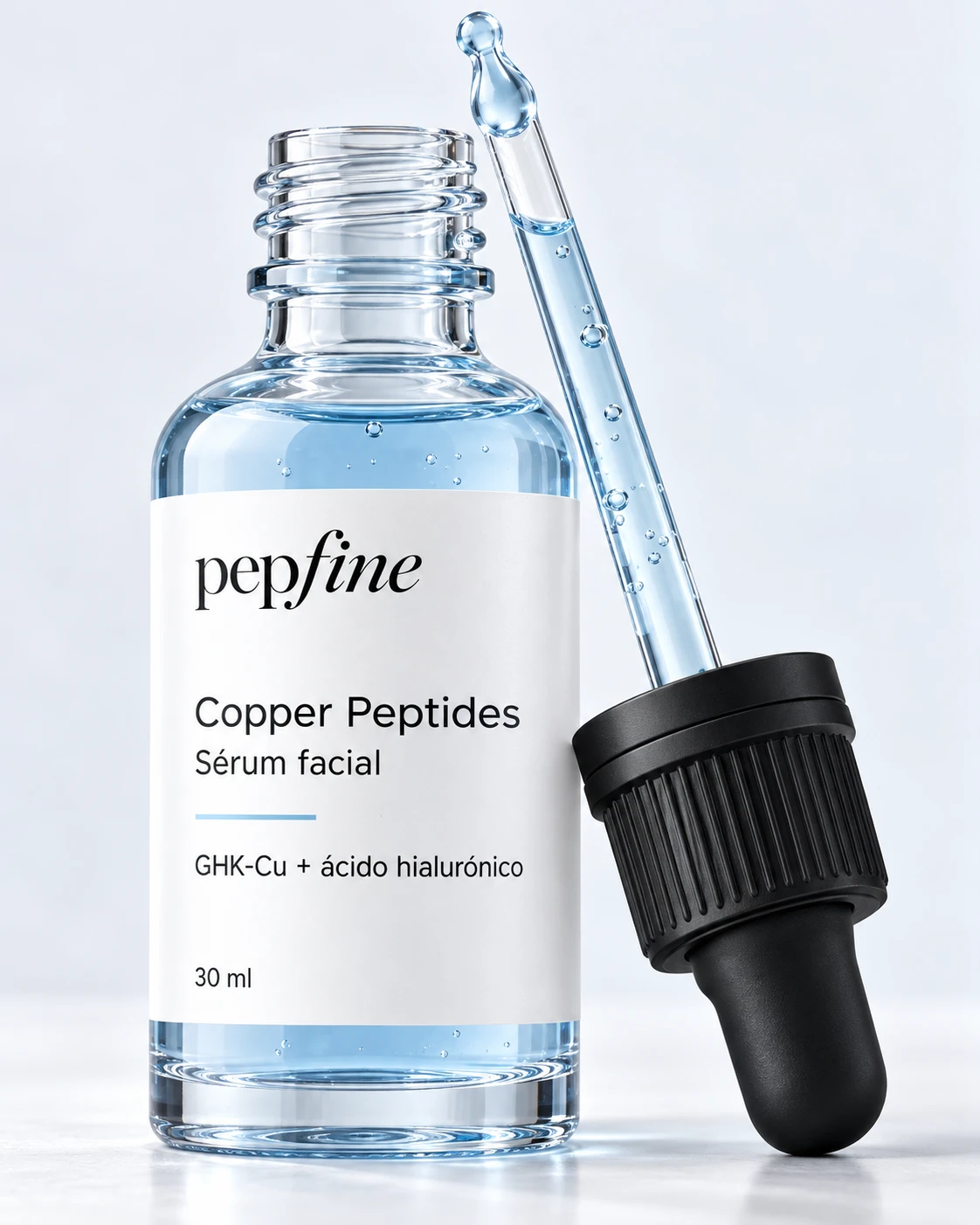
Hyaluronic acid helps hydrate the skin's surface and makes it feel soft. In the Pepfine Serum it's paired with copper peptide, with no exfoliating acids.
Does copper peptide reach the bloodstream?
The lab studies measured copper passing through pieces of skin, not what happens in the body with a serum used daily, so they don't answer that question. It's a cosmetic for external use; if you're pregnant, breastfeeding or have a health condition, check with your doctor before using it.
Can I use a microneedle roller at home to help it get in?
We don't recommend it: puncturing skin at home can irritate it and open the door to infection. If you have a microneedling procedure, follow the instructions of whoever did it about when to go back to serums.
Sources
- Human skin penetration of a copper tripeptide in vitro as a function of skin layer — Inflammation Research, PubMed (2011)
- Human skin retention and penetration of a copper tripeptide in vitro as function of skin layer towards anti-inflammatory therapy — Inflammation Research, PubMed (2010)
- Topical Vitamin C and the Skin: Mechanisms of Action and Clinical Applications — Journal of Clinical and Aesthetic Dermatology, PMC (2017)
- GHK Peptide as a Natural Modulator of Multiple Cellular Pathways in Skin Regeneration — BioMed Research International, PMC (2015)


 ✦✦✧✦