

Key takeaways
- In the ingredient list, copper peptide appears as "copper tripeptide-1."
- Ingredients go from most to least, but those at 1% or less can be listed in any order.
- That's why the peptide's position in the list doesn't tell you its exact percentage.
- Also check the directions, warnings, who is responsible for the product and how to store it.
Copper peptide serum ingredients: how do you read the label? First, look for the ingredient's name, "copper tripeptide-1," in the list. Second, know that the list goes from most to least, with an important exception for ingredients used in small amounts, like peptides.
In this guide we explain which names to look for, what the label does and doesn't tell you about amounts, what other parts are worth checking and how to store the bottle so it keeps well.
The names you'll find
In the ingredient list, copper peptide (GHK-Cu) appears as "copper tripeptide-1." It's a carrier peptide: a chain of three amino acids bound to copper. If you see other peptides with "palmitoyl" or "acetyl" in front, they belong to other groups, with a different job.3
- Copper tripeptide-1: copper peptide.
- Sodium hyaluronate or hyaluronic acid: hyaluronic acid, which helps hydrate.
- Glycerin: another ingredient that helps hold water.
- Water or aqua: almost always the first ingredient of a serum.
The FDA requires cosmetic ingredients to be listed by their established names. That's why you'll see them in English or under their technical name, even if the rest of the label is in Spanish.1
If your skin is sensitive
Also notice what you're not looking for. If you know fragrance irritates you, check whether "fragrance" or "parfum" appears. If a product ever gave you a reaction, write down its ingredient list and compare it with the new one: sometimes the same ingredient repeats under a different brand name.
What the ingredient order tells you
Under FDA labeling rules, cosmetic ingredients are listed from most to least. But there's an exception: color additives and ingredients at 1% or less can be listed without following that order.1
This matters with peptides, because they're usually used in small amounts. Whether copper peptide appears higher or lower in the list doesn't tell you its exact percentage. It may come after a preservative or a fragrance, and that doesn't mean there's "very little."1
What about the concentration?
A cosmetic label isn't required to show each ingredient's percentage. Some brands share it and others don't. If a brand does, take it as one more piece of information, not the only measure of quality: the full formula, the packaging and how you use it also count. Be careful comparing percentages across brands: two products with the same number can feel very different on skin because of the rest of the formula, and a higher percentage doesn't always mean it suits your skin better, especially if it's sensitive.
An example to practice
Picture a list that starts with water, glycerin and hyaluronic acid, continues with a preservative and ends with copper tripeptide-1. What you know for sure is that water is the largest amount. What you can't know is whether the peptide is at 0.1% or 1%: since it's present in small amounts, the brand can order it freely among the last ones. So rather than counting positions, check that the ingredient you want is there and that the rest of the formula is simple.
What a cosmetic label shouldn't promise
A copper peptide serum is a cosmetic: its purpose is cleansing, beautifying or altering appearance. If the label promises to fix diseases or change how the body works, it's presenting itself as a drug. Products that are both cosmetic and drug, like some with sunscreen, list their "active ingredients" first.4
A serum that only talks about how skin looks, like smoother or with a more even tone, is in cosmetic territory. Be wary of medical promises and of huge changes in just a few days.
Phrases that sound good but say little
Words like "clinical," "medical grade" or "lab formula" aren't official categories for a cosmetic. They don't mean the product is better or worse; they just mean it's worth going back to the ingredient list, the directions and who is responsible for the product, which is where the useful information is.
Other parts of the label worth checking
- The net contents, for example 30 ml, to work out how long it lasts.
- The directions: how many drops, what time of day and where not to apply it.
- The warnings: patch test, eye area, pregnancy or breastfeeding.
- The name and address of whoever sells or makes it.
- The lot number and, if there is one, the expiration date.
The FDA requires the label to state the name and place of business of the company selling the product. If the distributor isn't the manufacturer, that has to be stated too.1
Expiration and how to store it
In the U.S. there's no law requiring an expiration date on cosmetics. The FDA explains that heat can make preservatives break down and bacteria and fungi grow faster, and recommends not leaving cosmetics in hot places, like a car in the sun.2
- Close the bottle tightly after each use.
- Keep it in a cool, dry place, away from direct sun.
- Don't touch the dropper tip with your fingers or skin.
- If it changes a lot in color, smell or texture, don't use it.
The FDA also warns that temperature changes, sunlight and air can change a product's color, texture or smell, and that products resold online may be old, used or fake.2
How this looks on the Pepfine Serum
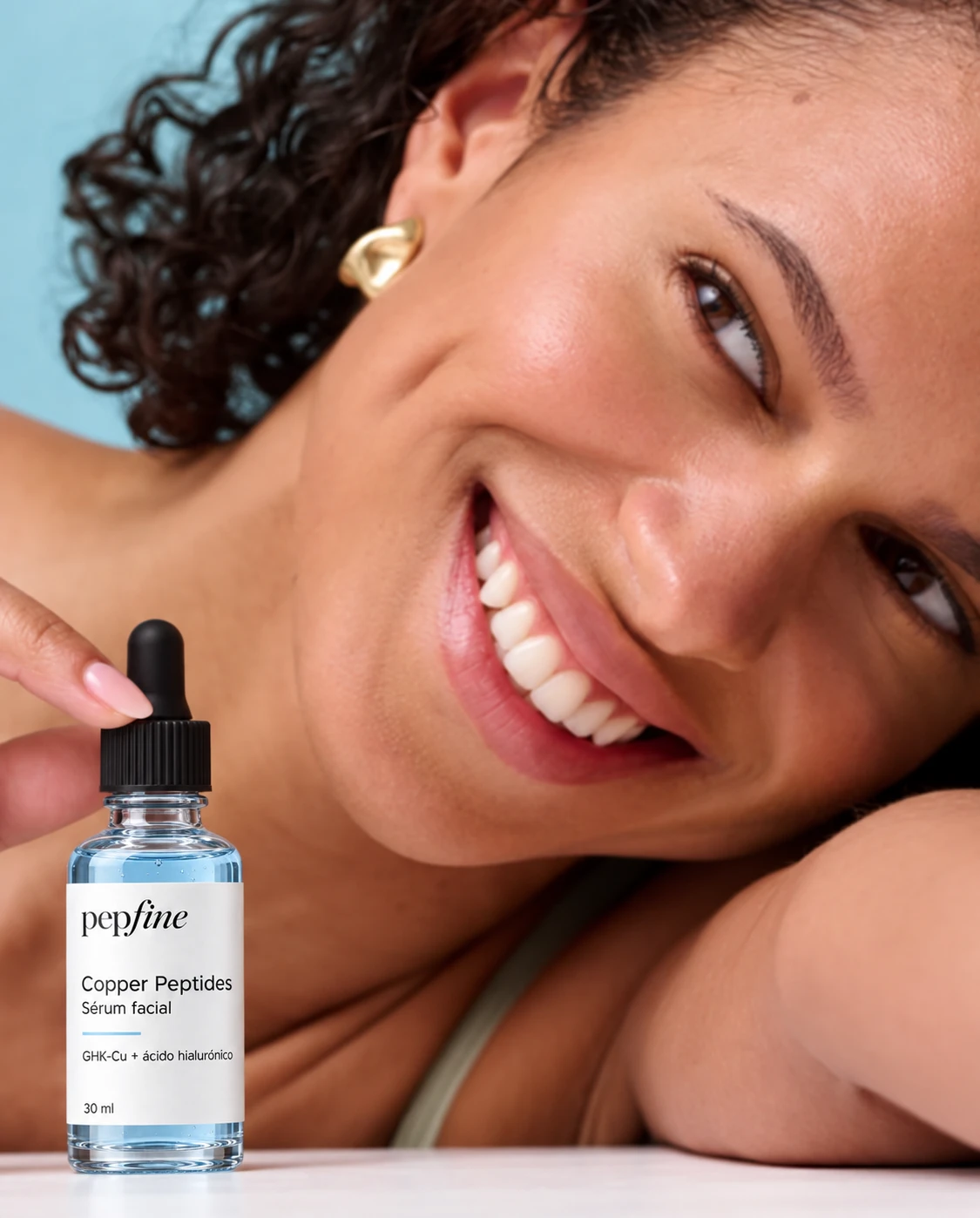
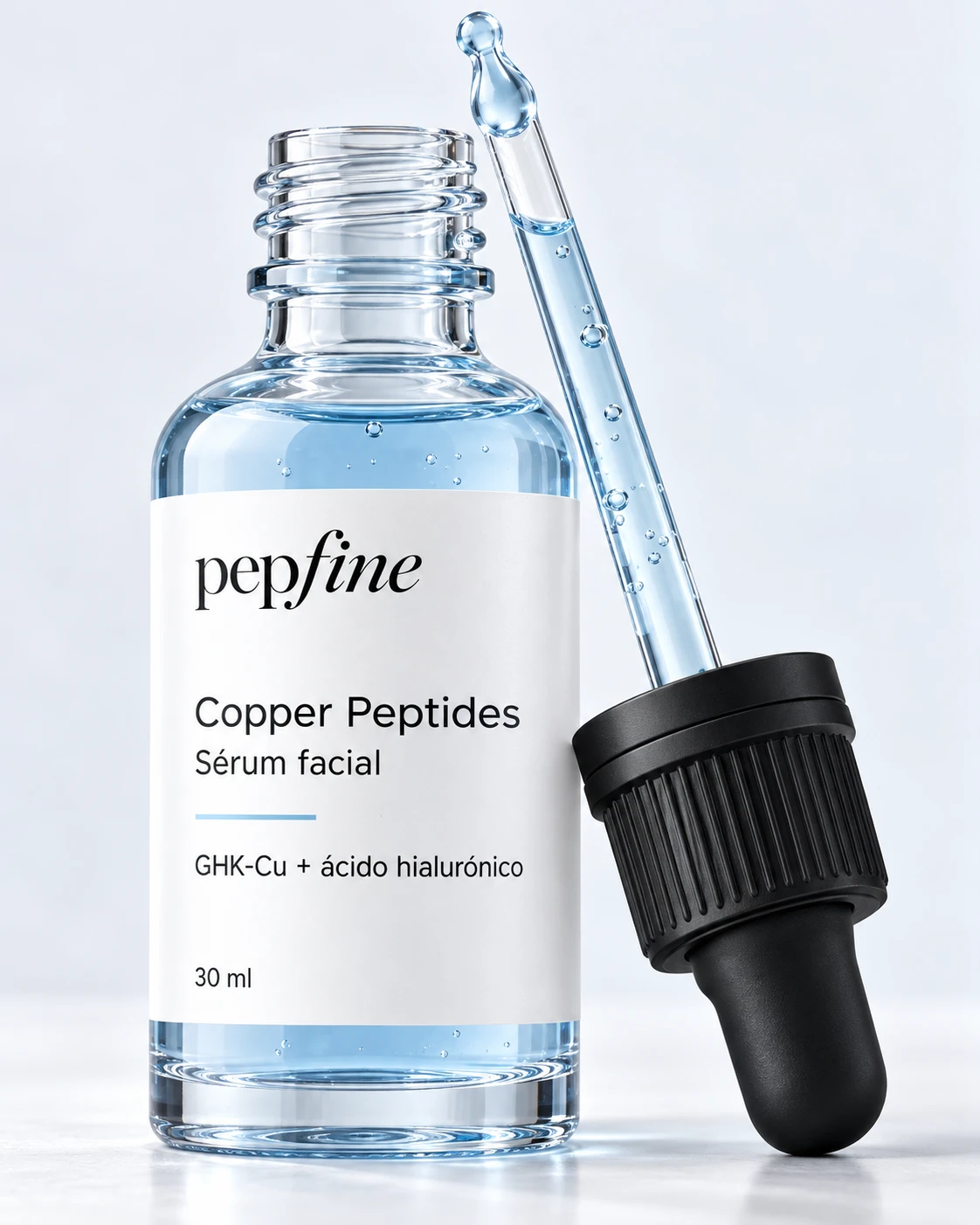
The Pepfine Serum is an external-use cosmetic with copper peptide (GHK-Cu) and hyaluronic acid, with no exfoliating acids. Each bottle holds 30 ml, which lasts about a month with recommended use: 3 or 4 drops on face and neck, morning and night, avoiding the eye area.
Its warnings say to try it first on a small area for 24 hours, stop if you feel burning or irritation, ask first if you're pregnant or breastfeeding, and keep it tightly closed in a cool, dry place, not in the car or next to the shower.
Frequently asked questions
How does copper peptide appear in the ingredient list?
As "copper tripeptide-1." It's the ingredient name for what's known as GHK-Cu.3
If copper peptide is at the end of the list, is there very little?
Not necessarily. Ingredients at 1% or less can be listed in any order, and peptides are usually used in small amounts. Their position doesn't tell you the exact percentage.1
Does my serum have to show an expiration date?
In the U.S. it isn't required. Even so, keep it tightly closed, away from heat, and stop using it if it changes a lot in color, smell or texture.2
Does the Pepfine Serum contain acids?
No. It contains copper peptide (GHK-Cu) and hyaluronic acid, with no exfoliating acids. Hyaluronic acid is called an "acid," but it doesn't exfoliate.
Sources
- Summary of Cosmetics Labeling Requirements — U.S. Food and Drug Administration (2025)
- Shelf Life and Expiration Dating of Cosmetics — U.S. Food and Drug Administration (2022)
- Overview of popular cosmeceuticals in dermatology — Skin Health and Disease, PMC (2024)
- Is It a Cosmetic, a Drug, or Both? (Or Is It Soap?) — U.S. Food and Drug Administration (2024)

 ✦✦✧✦