

Key takeaways
- Copper peptide is a carrier peptide: it carries copper to the skin. Most other serum peptides are signal or neurotransmitter-inhibitor peptides.
- They're all short chains of amino acids, but each group is used for something different in how skin looks.
- On the label, copper peptide appears as "copper tripeptide-1"; the others often have names like "palmitoyl" or "acetyl" in front.
- They can be used in the same routine; what matters is not overloading skin with too many actives at once.
Copper peptides vs regular peptides: what's the difference? They're all short chains of amino acids, but they don't do the same thing. Copper peptide (GHK-Cu) is a carrier peptide that carries copper to the skin, while most other serum peptides are signal or neurotransmitter-inhibitor peptides.
In this guide we explain the groups of peptides there are, what each one is used for in skincare, how to recognize them in the ingredient list and whether it makes sense to combine them in your routine.
What a peptide is
A peptide is a protein fragment: a short chain of amino acids. A 2024 review of cosmetic ingredients explains that bioactive peptides help cells communicate, and that both natural and synthetic ones are used in skincare.1
The same review sorts them into three groups by how they work: carrier, signal and neurotransmitter-inhibitor peptides. That's the key difference between copper peptide and the rest.1
Carrier peptides: where copper peptide fits
Carrier peptides help deliver minerals such as copper or manganese to the skin, which take part in several of its reactions. Copper peptide, which appears on the label as "copper tripeptide-1," is the best-known example. Another is manganese tripeptide-1.1
In skincare, copper peptide has been used to improve the look of fine lines, wrinkles and uneven tone linked to sun exposure. That's why it's often chosen when you want more even, smoother-looking skin.1
Why the copper matters
Copper is a mineral skin uses as a helper for some enzymes, including one involved in forming collagen and elastin. The 2024 review explains that this is one of the reasons copper peptide is used in skincare. It's information about how it works in studies, not a promise of results on your skin.1
GHK with and without copper
A fun fact: palmitoyl tripeptide-1, a widely used signal peptide, has the same three-amino-acid sequence as copper peptide (GHK), but without copper and with a fatty chain attached. In other words, the same base can make different ingredients depending on what's attached to it.1
Signal peptides
Signal peptides, also called matrikines, come from skin proteins such as collagen, elastin or fibronectin. The review explains they're used in formulas to improve the look of firmness, elasticity, hydration and wrinkles.1
- Palmitoyl tripeptide-1.
- Palmitoyl pentapeptide-4.
- Palmitoyl tetrapeptide-7, often combined with tripeptide-1.
It's the largest group, and many "peptide" serums and creams you find in stores contain one or more of them.
What to expect from a peptide serum
Peptides are gentle ingredients and usually feel light, but they don't make changes overnight. What helps most is choosing one product, using it consistently and comparing photos in the same light every few weeks, instead of checking the mirror every day. If you don't feel anything when you apply it, that doesn't mean it isn't doing its part: a peptide doesn't need to sting.
Peptides that relax expression lines
The third group is neurotransmitter-inhibitor peptides. According to the review, they interfere with the signal that contracts facial muscles, which is why they're used in skincare to soften the look of expression lines. A common example on labels is acetyl hexapeptide-3.1
They often appear in products for the eye area or forehead, where expression lines show most. Like other peptides, they're applied to clean skin and sealed with a moisturizer.
How to recognize them on the label
- Copper tripeptide-1: copper peptide (carrier).
- Palmitoyl followed by tripeptide, tetrapeptide or pentapeptide: almost always a signal peptide.
- Acetyl hexapeptide or pentapeptide-18: usually the expression-relaxing kind.
That first part of the name, like "palmitoyl" or "acetyl," is a modification added to the chain. The review notes that peptides have a limit: they struggle to get through the skin and can break down, and these modifications aim to improve how they pass through and how stable they are.1
Since cosmetic ingredients go from most to least, peptides usually appear in the middle or toward the end of the list, because they're used in small amounts. That's normal and doesn't mean the product has "too little."
What the label does and doesn't tell you
A peptide serum is a cosmetic: according to the FDA, cosmetics are products for cleansing, beautifying or altering the appearance. That's why their labels talk about how skin looks, not about health problems. Be wary of any peptide product that promises medical changes.2
Which to choose and can you combine them?
It depends on what you're after. If you want a more even-looking tone and smoother skin, copper peptide is a good option. If the look of firmness matters most to you, look at signal peptides. For expression lines, the third group.
Yes, you can combine them: peptides usually get along well, and many formulas already include several. If you use two products with different peptides, apply the lighter one first. What's best kept apart from copper peptide are strong exfoliating acids, retinol and pure vitamin C: use them at another time of day or on another night.
Start one product at a time and patch test if your skin reacts easily. More peptides isn't always better: a simple, consistent routine usually does more than one with many steps.
A simple routine with peptides
Morning
- Gentle cleanser with lukewarm water.
- Copper peptide serum or your peptide serum.
- Moisturizer.
- Broad-spectrum sunscreen.
Night
- Gentle cleanser to remove sunscreen.
- Peptide serum; if you use two, the lighter one first.
- Moisturizer, or your peptide eye cream before it.
On nights you use an exfoliating acid or retinol, leave out the copper peptide and stick to cleanser, that active and moisturizer.
Frequently asked questions
Is copper peptide better than other peptides?
It isn't better or worse: it does something different. It's a carrier peptide, while signal and expression-relaxing peptides work in other ways. Choose based on what you want for your skin.1
Can I use copper peptide and another peptide serum?
Yes. Apply the lighter one first, wait a few seconds and follow with the other. If your skin feels heavy, use one in the morning and the other at night.
How do I know which peptides my product has?
Check the ingredient list. Look for "copper tripeptide-1" for copper peptide and names starting with "palmitoyl" or "acetyl" for the other groups.
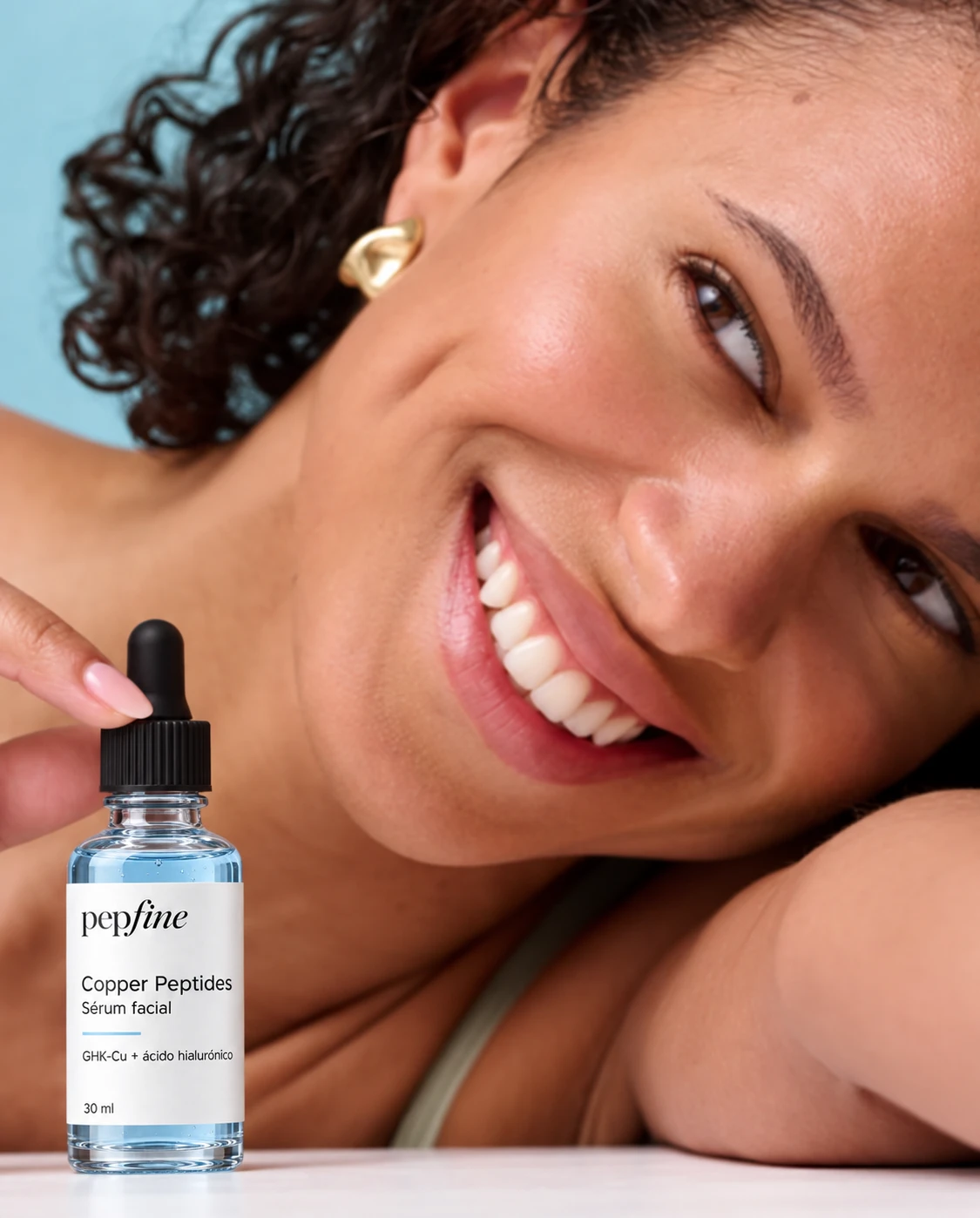
Which peptide does the Pepfine Serum contain?
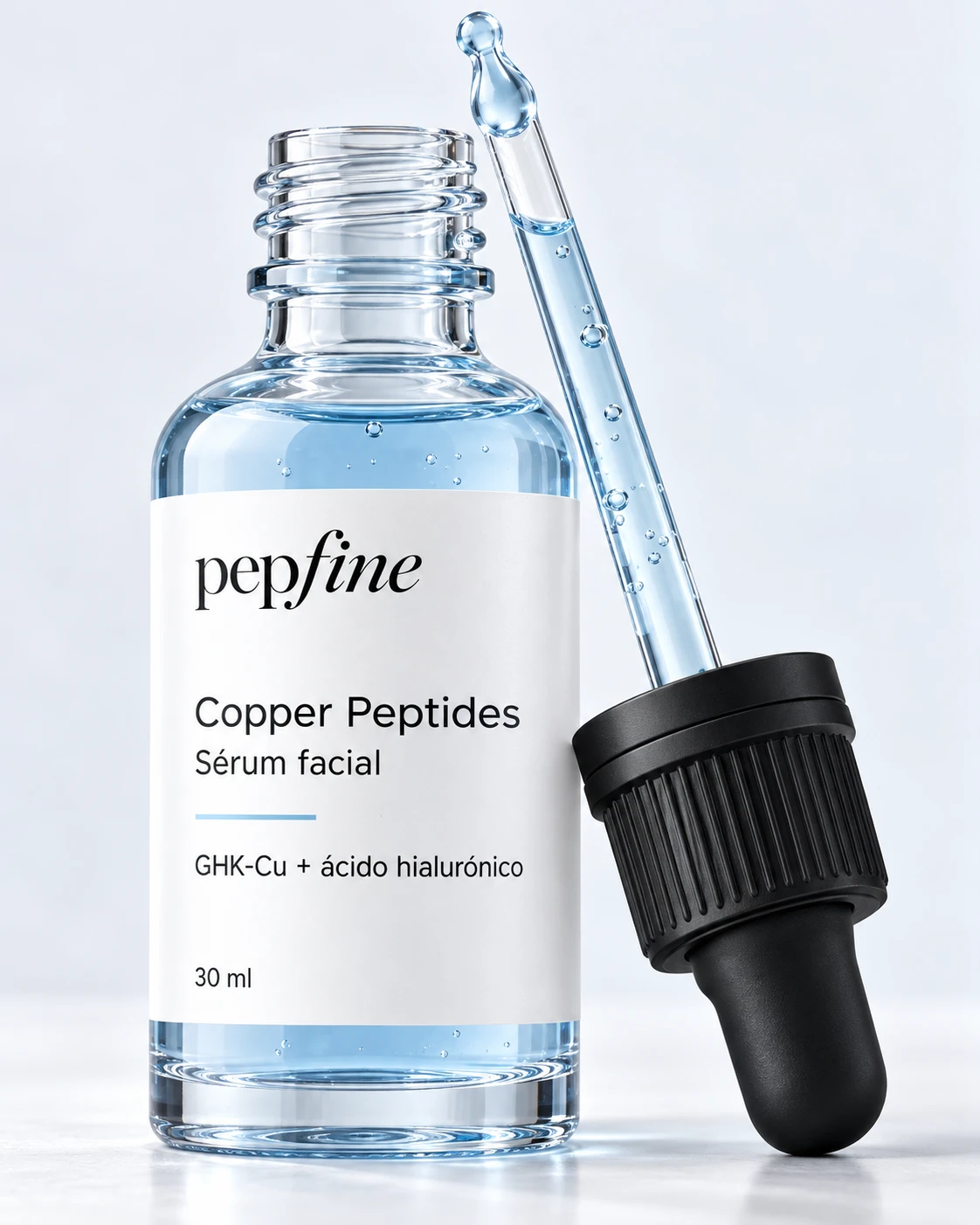
Copper peptide (GHK-Cu), together with hyaluronic acid and no exfoliating acids. Apply 3 or 4 drops morning and night to clean skin, before moisturizer.

 ✦✦✧✦