

Key takeaways
- No: copper peptide serums are cosmetics, and in the U.S. cosmetics don't go through FDA premarket approval.
- Not being "approved" doesn't mean no one oversees them: the company is responsible for safety and the FDA can act if a product breaks the law.
- What decides whether something is a cosmetic or a drug is its intended use, meaning what it promises.
- Be wary of any cosmetic that boasts FDA backing or promises to fix diseases.
Does the FDA approve copper peptide? The short answer is that it doesn't need to, and that isn't a bad sign: copper peptide serums are cosmetics, and in the U.S. cosmetics and their ingredients don't need FDA approval before they're sold, except for color additives.1
That doesn't mean there are no rules. In this guide we explain what it means for a product to be a cosmetic or a drug, what the law does require, what changed with the 2022 law and what to check before buying a copper peptide product.
Does the FDA approve copper peptide?
The FDA explains that its authority over cosmetics is different from its authority over drugs or medical devices. Drugs need approval before going on sale; cosmetics don't. That's why no cosmetic copper peptide serum, including ours, has FDA approval: that step doesn't exist for cosmetics.1
What does apply is that, except for color additives and prohibited or restricted ingredients, a manufacturer may use an ingredient in a cosmetic as long as the product is safe under its labeled conditions of use and properly labeled.1
The exception: color additives
Among cosmetics, color additives are the exception: they do need FDA approval before use. There are also prohibited or restricted ingredients that can't be used freely. Copper peptide isn't a color additive, so it falls under the general rule: the company is responsible for making sure its formula is safe and properly labeled.1
Cosmetic or drug: intended use decides
Under U.S. law, a cosmetic is a product for cleansing, beautifying, promoting attractiveness or altering the appearance. A drug, by contrast, is a product meant to diagnose, mitigate or prevent disease, among other medical uses, or to affect the structure or a function of the body.2
The FDA notes that what decides a product's category is its intended use, and that this use can be seen in what the label, advertising and website say. The same ingredient can be in a cosmetic or a drug: what changes is what the product promises.2
Products that are both
Some products are both a cosmetic and a drug, such as an anti-dandruff shampoo or a moisturizer with sunscreen. In that case they carry a drug label with their active ingredients. A copper peptide serum that only talks about how skin looks is a cosmetic.2
An example with copper peptide
A serum that says it helps skin look smoother and more even is talking about appearance, so it's a cosmetic. If the same serum said it heals wounds or resolves a skin problem, it would be promising a drug use, and it would have to follow the rules for drugs. That's why, when you read a label or an ad, pay more attention to what it promises than to the ingredient.2
If there's no approval, who ensures safety?
The company that makes or sells a cosmetic has the legal responsibility to make sure it's safe. The law doesn't require specific tests for each product or ingredient, but it does require safety to be substantiated. The FDA, for its part, can act against products on the market that break the law, collect samples during inspections and follow up on complaints.1
The law prohibits selling adulterated cosmetics, for example ones with harmful substances or made in unsanitary conditions, and misbranded cosmetics.1
Recalls
When a cosmetic poses a hazard, the company usually removes it from the market voluntarily. The FDA monitors those recalls and can request one if a company won't pull a dangerous product.1
What the FDA doesn't do
The FDA doesn't work as a private testing lab or recommend labs to test products. It also doesn't review every formula before it reaches the store. That's why it helps so much that you also know how to read a label: what it promises, the ingredient list and who is responsible for the product tell you a lot about who you're buying from.1
What changed with the 2022 law (MoCRA)
The Modernization of Cosmetics Regulation Act of 2022 is the biggest expansion of the FDA's authority over cosmetics since 1938. It didn't create premarket approval, but it did add obligations for companies.3
- Registering the facilities where cosmetics are made and renewing the registration.
- Listing each product with the FDA, including its ingredients.
- Reporting serious adverse events to the FDA.
- Keeping records that support each product's safety.
For you as a shopper, this means the FDA now has more information about which cosmetics are sold, where they're made and which serious reactions are reported, even though there's still no approval before sale.
Also, the label must show the person responsible for the product: the manufacturer, packer or distributor.3
What to check before buying a copper peptide product
- That it talks about how skin looks, not about diseases.
- That it doesn't boast FDA backing: a cosmetic doesn't go through that approval.
- That it has a full ingredient list; copper peptide appears as "copper tripeptide-1."
- That it says who is responsible for the product and how to contact them.
- That the safety seal is intact.
If a product promises medical changes, it's probably presenting itself as something it isn't. Also compare what the box says with what the website or ads say: if one talks about appearance and the other promises much more, it's best to be skeptical. And if something causes a reaction, stop using it.
If a cosmetic causes a reaction
Stop using it, keep the container with its label and lot number, and see a dermatologist if the reaction is strong or doesn't go away. You can also let the company know using the contact details on the label: under the 2022 law, the person responsible for the product must report serious adverse events to the FDA.3
Frequently asked questions
Does the FDA approve copper peptide?
No, and it doesn't need to be: in the U.S., cosmetics and their ingredients, except color additives, don't need premarket approval. That doesn't mean there are no rules.1
Is a cosmetic that boasts FDA backing more trustworthy?
Quite the opposite: since cosmetics don't go through FDA approval, claiming it is a sign to look at the product more carefully.1
Why doesn't my serum have "Drug Facts"?
Because it's a cosmetic. The "Drug Facts" label and the active ingredients list are for over-the-counter drugs or products that are also drugs.2
Is the Pepfine Serum a drug?
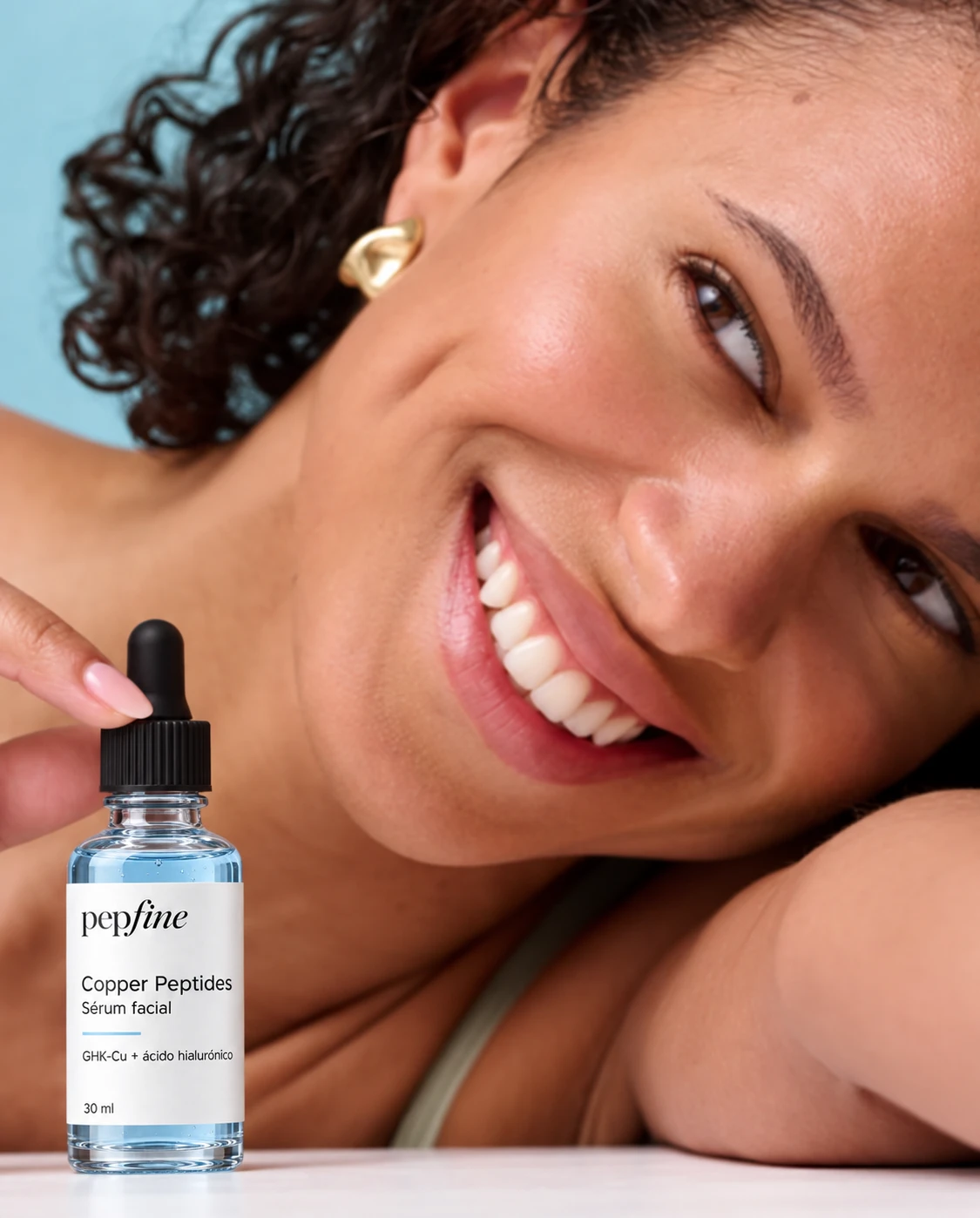
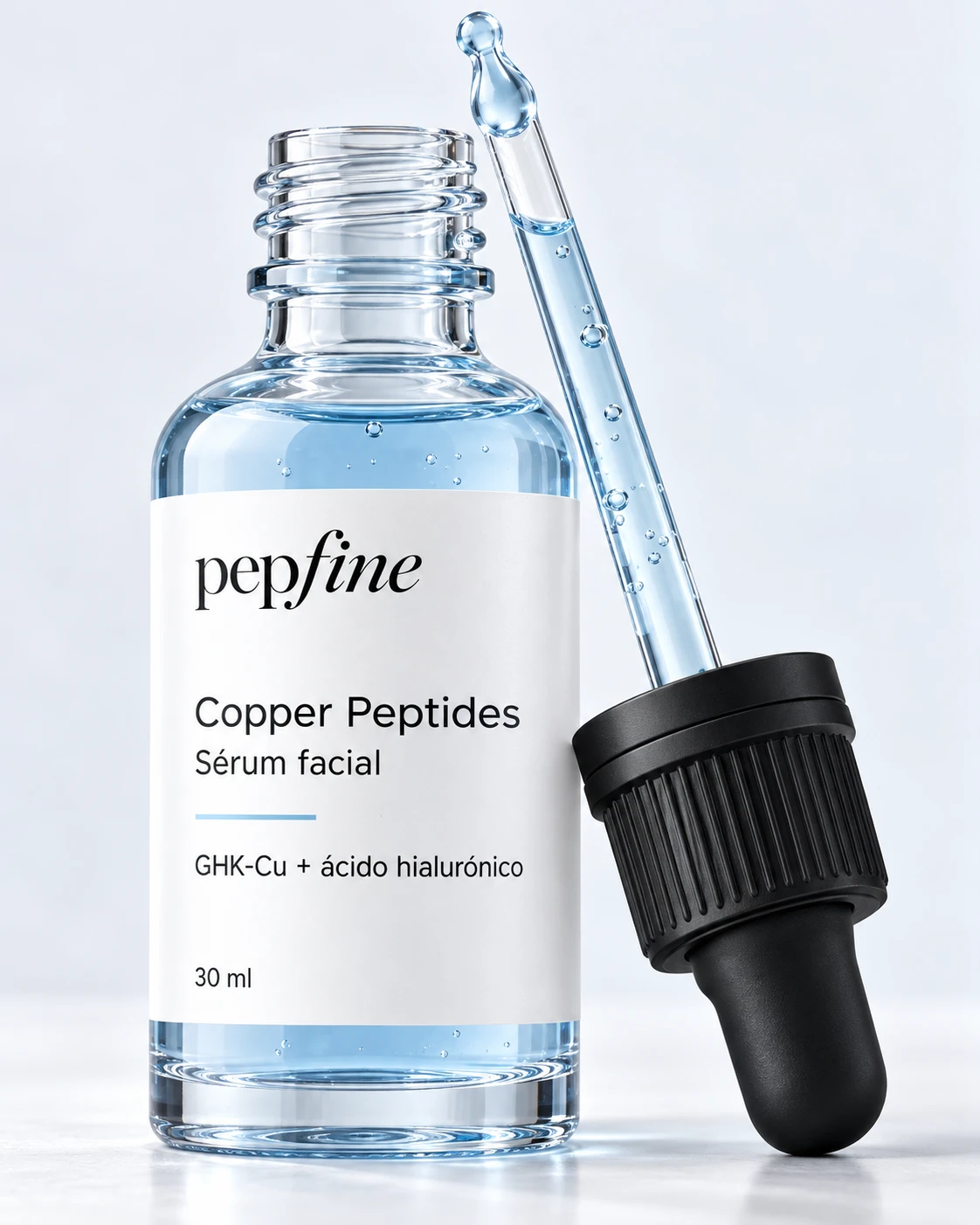
No. It's a cosmetic with copper peptide (GHK-Cu) and hyaluronic acid, with no exfoliating acids, made to care for how skin looks.
Sources
- FDA Authority Over Cosmetics: How Cosmetics Are Not FDA-Approved, but Are FDA-Regulated — U.S. Food and Drug Administration (2025)
- Is It a Cosmetic, a Drug, or Both? (Or Is It Soap?) — U.S. Food and Drug Administration (2024)
- Modernization of Cosmetics Regulation Act of 2022 (MoCRA) — U.S. Food and Drug Administration (2026)

 ✦✦✧✦